Why NJ Small Businesses Are the Number One Target for Ransomware in 2026
10
min read
Why NJ Small Businesses Are the Number One Target for Ransomware in 2026
There is a common assumption among small business owners in New Jersey that cyberattacks are a large company problem. That hackers go after banks, hospitals, and Fortune 500 companies — not a 20-person accounting firm in Morris County or a family-owned distribution business in Union County.
That assumption is wrong. And in 2026, it is more dangerous than ever.
Ransomware attacks hit small businesses in 88% of recorded incidents last year. The average ransom demand for a small or mid-sized business now exceeds $120,000 — and that figure does not include recovery costs, legal exposure, or the weeks of downtime that follow a serious attack. Some businesses never reopen.
This is not a technology problem. It is a business survival problem.
Why Small Businesses Are the Preferred Target
Cybercriminals are rational actors. They go where the returns are highest relative to the effort required. And small businesses offer an attractive combination: valuable data, weaker defenses, and a higher likelihood of paying quickly to get back online.
Large corporations have dedicated security teams, enterprise-grade tools, and incident response plans. A ransomware group attacking JPMorgan Chase is picking a fight with a heavily armed opponent. A ransomware group attacking a 15-person law firm in Hoboken is walking through an unlocked door.
The math is simple from an attacker's perspective. Lower defenses, faster payouts, less risk.
Ransomware has also evolved into a commercial product. Ransomware-as-a-Service platforms now allow criminals with no technical background to launch sophisticated attacks by renting pre-built toolkits from organized criminal groups. The barrier to entry for attacking your business has never been lower.
What Ransomware Actually Does to a Business
Understanding the mechanics of a modern ransomware attack helps explain why it is so devastating.
Stage 1 — Initial Access Attackers typically get in through one of three ways: a phishing email that an employee clicks, an exposed remote desktop connection with a weak password, or a vulnerability in software that has not been patched. The entry point is almost always something preventable.
Stage 2 — Reconnaissance Once inside, attackers move quietly. They map your network, identify your most valuable files, locate your backups, and determine who has administrative access. This phase can last days or weeks. You have no idea they are there.
Stage 3 — Data Exfiltration Before encrypting anything, modern ransomware groups steal your data. They copy your client records, financial files, employee information, and anything else of value. This is the foundation of double extortion.
Stage 4 — Encryption Every file on your network is encrypted. Your systems stop working. Your employees cannot access anything. Operations grind to a halt.
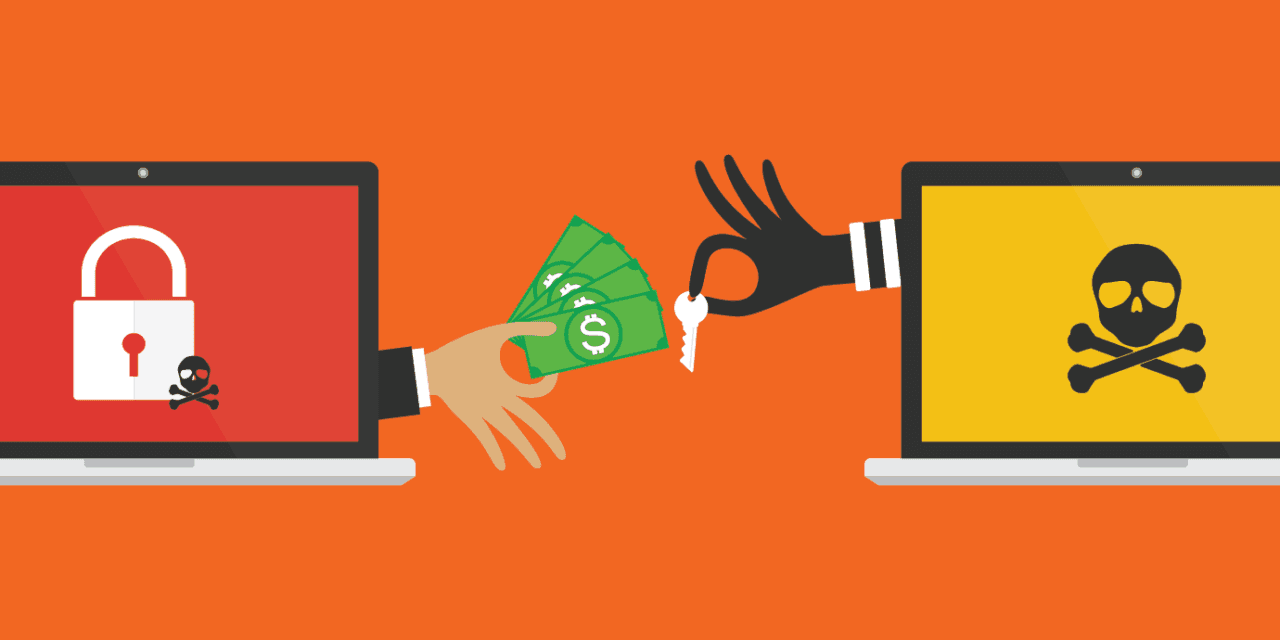
Stage 5 — Extortion You receive a ransom demand. Pay to get the decryption key and restore your files. If you refuse or restore from backup, they threaten to publish your stolen data publicly — exposing your clients, your financials, and your business to potential regulatory penalties and reputational damage.
Paying does not guarantee recovery. Restoring from backup does not make the data exposure threat go away. There is no clean exit from a ransomware incident.
The Most Common Entry Points for NJ Small Businesses
Based on what we see in the field across New Jersey businesses, these are the vulnerabilities attackers exploit most often:
Phishing emails An employee receives an email that looks like it is from a vendor, a bank, or even a colleague. They click a link or open an attachment. That single click can give an attacker a foothold in your entire network. Phishing drove 36% of confirmed breaches last year and remains the number one entry point.
Weak or reused passwords Employees using the same password across multiple accounts, or using simple passwords that are easy to guess, create easy access points. Without multi-factor authentication, a stolen password is all an attacker needs.
Unpatched software Every piece of software on your network — operating systems, applications, remote access tools — has vulnerabilities that get discovered over time. Vendors release patches to fix them. When businesses fall behind on updates, those vulnerabilities remain open. Attackers actively scan for them.
Remote access without proper security Remote desktop protocol (RDP) exposed to the internet without proper authentication controls is one of the most exploited attack vectors in small business ransomware incidents. Many businesses set up remote access during the pandemic and never properly secured it.
No network segmentation When every device on your network can communicate freely with every other device, a single compromised endpoint can give an attacker access to everything. Proper network segmentation limits how far an attacker can move once inside.
What a Ransomware Attack Actually Costs
The ransom demand is only the beginning of the financial impact.
A realistic cost breakdown for a small NJ business hit by ransomware looks something like this:
Ransom payment: $50,000 to $200,000 depending on the size of the business and what was encrypted
IT recovery and forensics: $20,000 to $50,000 to investigate, clean, and restore systems
Downtime costs: Variable — but a business offline for two weeks loses two weeks of revenue while still paying payroll and overhead
Legal and regulatory exposure: If client data was compromised, particularly for businesses in healthcare, finance, or legal services, regulatory penalties and legal fees can dwarf the ransom itself
Reputational damage: Harder to quantify but very real — clients who learn their data was exposed often do not stay
The total cost of a ransomware incident for a small business regularly exceeds $500,000 when all factors are accounted for. For a business operating on thin margins, that is often fatal.
What Actually Prevents Ransomware
Ransomware is not inevitable. The vast majority of successful attacks exploit basic, preventable gaps in security posture. Here is what works:
Multi-factor authentication on everything MFA prevents more than 99% of credential-based attacks according to Microsoft's research. It is one of the highest-impact, lowest-cost security controls available and should be enabled on every account — email, remote access, cloud services, and internal systems.
Regular, tested backups following the 3-2-1 rule Three copies of your data, on two different types of media, with one copy offsite or in the cloud. Backups need to be tested regularly — a backup you have never restored from is a backup you cannot count on when you need it most.
Patch management Every device and application on your network should be on a regular patching schedule. Unpatched systems are an open invitation. A managed IT provider handles this automatically so nothing gets missed.
Employee security awareness training Since phishing is the number one entry point, training employees to recognize suspicious emails, links, and attachments is essential. This does not need to be complex — regular, practical training on what to look for makes a measurable difference.
Endpoint detection and response Traditional antivirus catches known malware. Modern endpoint detection and response (EDR) tools monitor behavior across your devices and can identify and contain threats that have never been seen before. For small businesses, this capability is now accessible through managed IT providers without enterprise-level budgets.
Network segmentation Separating your network into logical segments limits how far an attacker can move if they get in. Your employee workstations, servers, guest Wi-Fi, and any connected devices should not all share the same network path.
Incident response planning Knowing what to do in the first hours of a ransomware incident dramatically reduces the damage. Who do you call? What systems do you isolate? Where are your backups? Having answers to these questions before an incident happens is the difference between a manageable crisis and a catastrophic one.
Where NJ Small Businesses Stand Right Now
New Jersey's small business landscape includes a significant number of businesses in healthcare, legal services, financial services, and professional services — industries that handle sensitive client data and face regulatory compliance requirements on top of general cybersecurity obligations.
HIPAA, PCI-DSS, and various state data protection requirements create legal obligations around how data is stored, protected, and reported in the event of a breach. A ransomware attack that exposes client data does not just cost money to recover from — it can trigger regulatory investigations, mandatory breach notifications, and civil liability.
For many NJ small businesses, the regulatory exposure from a data breach is as significant a threat as the operational disruption.
The Practical Path Forward
Protecting your business from ransomware does not require a massive IT budget or a dedicated security team. What it requires is a structured, proactive approach to the basics.
Most businesses that get hit by ransomware were not unlucky. They had specific, identifiable gaps in their security posture that an attacker found and exploited. Those gaps — weak passwords, unpatched software, no MFA, inadequate backups — are addressable.
A managed IT provider handles these fundamentals continuously. Patches get applied. Backups get tested. MFA gets enforced. Suspicious activity gets flagged before it becomes an incident. The protection is ongoing, not a one-time project.
For New Jersey small businesses, the question is not whether to take cybersecurity seriously. The data on who attackers target has already answered that question. The question is whether you address it proactively or reactively — and for most businesses, reacting after a ransomware incident is too late.
What to Do Next
If you are a small business owner in New Jersey and you are not confident in your current cybersecurity posture, start with a security assessment. Not a sales pitch — a genuine evaluation of where your gaps are and what it would take to close them.
Nexus Ideal Solutions provides free cybersecurity assessments for NJ businesses. We look at your current setup, identify your highest-risk exposures, and give you a clear, honest picture of where you stand.
Schedule your free assessment at nexusidealsolutions.com
Frequently Asked Questions
Are small businesses really targeted as often as large companies? Yes. Ransomware accounted for 88% of breaches at small and mid-sized businesses last year compared to 39% for larger organizations. Small businesses are disproportionately targeted because they typically have weaker defenses and a higher likelihood of paying quickly.
What should I do if my business gets hit by ransomware? Immediately disconnect affected systems from your network to stop the spread. Contact your IT provider or a cybersecurity incident response team. Do not pay the ransom without consulting a professional — payment does not guarantee recovery and funds further criminal activity. Notify your cyber insurance carrier if you have coverage.
Does cyber insurance cover ransomware? Most cyber insurance policies cover ransomware to some degree, but coverage varies significantly. Insurers are increasingly requiring businesses to have specific security controls in place — MFA, endpoint protection, tested backups — as conditions of coverage. Businesses without these controls may find their claims denied or their premiums prohibitively high.
How long does it take to recover from a ransomware attack? Recovery timelines vary depending on the scope of the attack and the quality of your backups. Businesses with well-maintained, tested backups can restore operations in days. Businesses without adequate backups can face weeks or months of recovery — or permanent data loss.
What is the difference between antivirus and endpoint detection and response? Traditional antivirus identifies known malware by matching it against a database of known threats. Endpoint detection and response monitors behavior across your devices and can identify threats that have never been seen before, including new ransomware variants. For businesses facing modern threats, EDR provides significantly stronger protection.
How much does cybersecurity actually cost for a small NJ business? The cost of proactive cybersecurity through a managed IT provider is a fraction of the cost of a ransomware incident. Most small NJ businesses pay a predictable monthly fee that covers monitoring, patch management, endpoint protection, and backup management — far less than the average $120,000 ransom demand, before accounting for recovery costs and downtime.

